What are the causes of infertility in men?
The main causes of infertility in men can be roughly divided into two as disorders in the production of sperm and disorders in the outflow of sperm despite the normal production. In the first, the defects in production can be caused by genetic diseases and abnormalities related to the pituitary gland that gives the production order, or it can be due to problems arising from the testicles themselves.
Severe previous infections and mumps experienced in childhood are the most well-known of them. Decreased production of the testicles may occur as a result of traumas, undescended testicles, and surgical interventions, and decreased sperm production can cause scarcity, absence and movement disorder of the sperm. In cases where the sperm cannot come out normally and pregnancy does not occur by normal means, infections, traumas and surgical procedures that block the exit route of the sperm can be mentioned.
When and how is male infertility research done?
If pregnancy does not occur despite the desire to have a child and regular intercourse for 1 year, sperm analysis should be done and investigated in men. However, since the age of women is more important in order to achieve pregnancy here, if the age of the husband's wife is over 30 years old, the research should be started earlier for men as well. Apart from this, if there are genetic disorders from a known family, and disorders known to have been experienced in childhood, it is necessary to proceed to earlier research and not wait for 1 year.
Sperm analysis is the gold standard in male infertility research. We know that sperm count is analyzed and evaluated by various methods. Whatever method is used, it is quite simple, and after a period of 2 to 5 days of non-ejaculation, which we call sexual abstinence, it will be sufficient for men to give sperm in the laboratory in order to obtain their sperm analysis as a result of a count of 1 and a half hours.
What are sperm abnormalities in men?
Sperm abnormalities can be structural, numerical, and motile. Structural abnormalities are deformities in sperm. Some of them are genetically inherited. The reasons for some others are unknown.
Numerical abnormality is that the number of sperms is low, and the absence of sperm is called azoospermia. There may be various reasons for this. Genetic diseases, production disorders, previous infections or traumas can cause azoospermia, that is, the absence of sperm.
How are sperm abnormalities in men treated?
The factor that causes sperm abnormality can be found and if it is a treatable factor, it is necessary to turn to its treatment first. For example, if the sperm production is normal but the sperm cannot go out, determining the blocked channels and thus opening these channels by surgical methods can provide a normal sperm count and motility.
However, in the case of insufficient production or no production, the treatment becomes somewhat difficult in the case of what we call azoospermia. It is possible to achieve pregnancy with in vitro fertilization by microinjection method if there are healthy sperms in the testicles, by investigating whether there is sperm in the testicles with methods such as micro TESE.
Unfortunately, there is no very effective medication or nutritional regimen or any herbal cure that will increase the sperm count or motility. There are some elements that have been reported to have limited effects, but they are never sufficient to correct highly abnormal sperm.
Low sperm count
Low sperm count in men can occur for many reasons. Among these are the following factors:
- Genetic factors
- Hormonal imbalances
- Inflammation or infections
- Tuberculosis or other chronic diseases
- Chemicals, radiation or harmful workplace conditions
- Smoking, alcohol or medication use
- Extreme heat (for example, a hot bath or sauna)
- Obesity
- Stress.
Treatment options may vary depending on the cause. However, usually
- Hormonal imbalances are corrected with medications or hormone therapy.
- Infections or inflammations are treated with antibiotics or other medications.
- It improves with quitting smoking, alcohol or medication use.
- Obesity is treated with a healthy diet and exercise.
- Stress is reduced by means of meditation, yoga or psychologist support.
For these reasons, it is important to consult a specialist first for the treatment of low sperm count in men.
MESA/TESA
MESA involves removing the sperm from the epididymis with a microscopic needle. This method is used for men who do not have sperm in the urine.
TESA involves removing the sperm from the testicles with a microscopic needle. This method is used for men who do not have sperm in the urine or epididymis.
Both methods are used by processing the collected sperm in the laboratory and then injecting single sperm cells called ICSI (Intracytoplasmic Sperm Injection).
Mikro TESE
Micro TESE (Microsurgical Testicular Sperm Extraction) is a surgical method used in infertile men when there are no sperms or they are scarce. This method involves removing the sperm inside the testicles with a microscopic needle.
Micro TESE aims to find sperm in the testicles. This method is used for men who do not have sperm in the urine or epididymis. This method is performed by examining the testicles under a microscope and detecting the areas with sperm. The sperms obtained by this method are used by the method of injecting single sperm cells called ICSI (Intracytoplasmic Sperm Injection).
Varicocele
What is Varicocele?
Varicocele is one of the most common abnormalities in men who cannot impregnate their partners. The enlargements in the vascular system carrying dirty blood from the testicles are called the pampiniform plexus, that is, varicocele.
It is useful to examine the relationship between varicocele and infertility from many different perspectives.
Varicocele can be visible, palpable or detectable by Doppler ultrasound examination. When detected by Doppler ultrasound, it is called subclinical varicocele. Apart from infertility, the most prominent complaint in victimized men is chronic inguinal pain and a feeling of pressure. Today, only visible or palpable varicocele is considered important.
Incidence of varicocele
20% of men who have previously impregnated their partner have a varicocele. In infertile couples where the woman is normal, the incidence is around 35-40%. Clinical varicocele is seen in 20% of young men enlisted in the United States. In the later long-term follow-ups of these men, there was a difference in the rate of impregnating their spouses between those with and without varicocele.
There is no universally accepted theory about how varicocele causes infertility. Although it is said that sperm morphology and movement disorder, called stress pattern, is observed in the semen of victimized men, the fact that similar disorders are also observed in non-victims cast a shadow over the importance of this finding.
When the sperm count, motility and structural features were compared in men with varicocele, the difference was not observed in all studies.
What is the treatment method?
The treatment of varicocele today is surgery. With microsurgery, the enlarged veins are ligated with an operation called spermatic vein ligation. This operation can be performed endoscopically, or radiological embolization (injection of a substance that occludes the enlarged vein under radiological control) techniques can also be used. There is no clear consensus as to which one is superior, as there are no comparative studies of the techniques.
How useful is the treatment?
The generally accepted view among urologists is that the repair of subclinical varicoceles (cases detected by Doppler ultrasound) has no benefit. There is a consensus on the treatment of clinical, palpable or visible varicoceles, especially those associated with chronic inguinal pain or feeling of pressure, and varicoceles seen at younger ages.
Treatment of infertile men with abnormal semen parameters (with abnormal sperm values) is commonly carried out by urologists. In contrast, andrologists and gynecologists are more skeptical about whether the treatment of such varicoceles is beneficial.
When the controlled studies were evaluated collectively, it was observed that there was no change in the chances of men impregnating their wives with and without varicocele repair. Varicocele repair is meaningless, especially in cases of azoospermia (no sperm in the semen sample) or severe oligospermia (men with a sperm count of 0 or less than 1 million per ml). In cases where the sperm count is over 5 million, the woman is young, and the infertility period is short, treatment can be considered.
In post-operative recurrent varicoceles, a second operation is not performed unless the patient has complaints. As a result, today varicocele is a phenomenon that is overdiagnosed and repaired unnecessarily, especially in infertile couples. Because the relationship between varicocele and infertility has not been clarified and treatment has not shown any benefit, varicoceles are currently considered as incidental findings encountered in infertility research.
Azoospermia
Azoospermia is a condition in which the sperm count in men is below normal levels. In this case, it is considered that there is a problem with the production of sperm. In azoospermia, no sperm is usually found in the urine.
Treatment for azoospermia can vary depending on its cause. Among the causes are the following factors
- Hormonal imbalances
- Tuberculosis or other chronic diseases
- Chemicals, radiation or harmful workplace conditions
- Smoking, alcohol or medication use
- Extreme heat (for example, a hot bath or sauna)
- Obesity
- Varicocele.
The treatment option may vary depending on the cause of azoospermia. However, usually
- Hormonal imbalances are corrected with medications or hormone therapy.
- Infections or inflammations are treated with antibiotics or other medications.
- It improves with quitting smoking, alcohol or medication use.
- Obesity is treated with a healthy diet and exercise.
- Varicocele is treated surgically.
The important thing in the treatment of azoospermia is to determine the cause and to apply a treatment option for those causes. For these reasons, it is important for men with azoospermia to consult a specialist first.
Sperm morphology
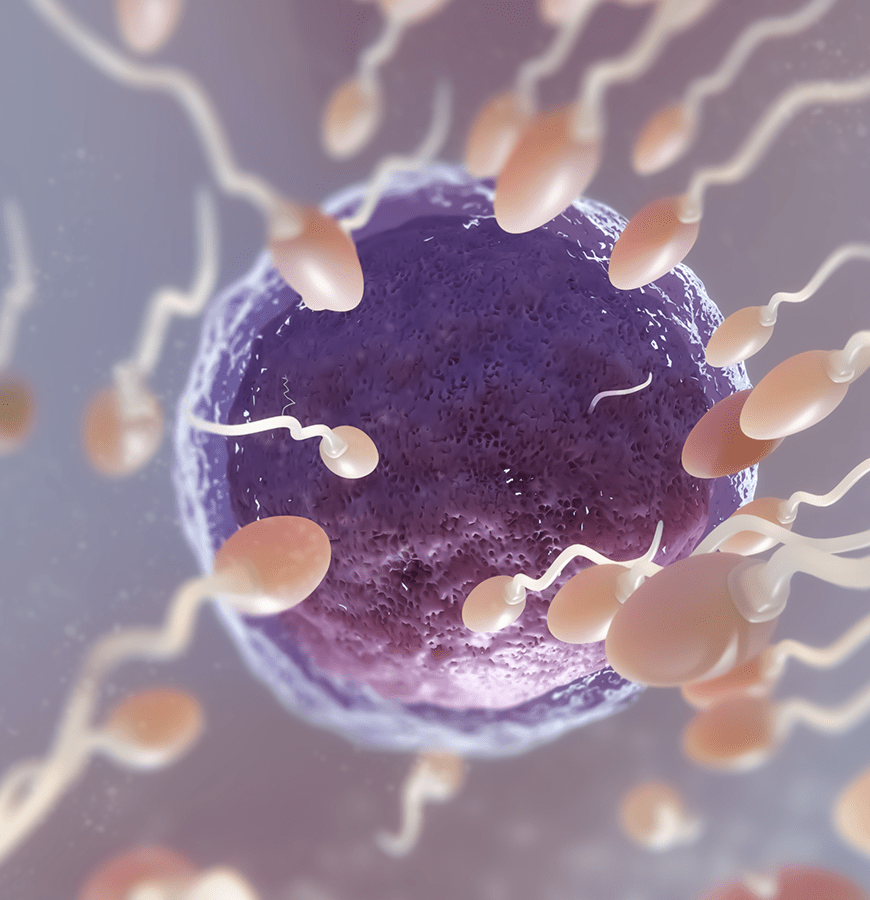
Sperm morphology is the study of the shape and structure of sperm cells. Sperm morphology is used to determine whether the sperms are normal or constitute one of the causes of infertility.
Sperm morphology is examined in a laboratory setting. Sperm cells are examined under a microscope and the percentage of normal sperm cells is determined. The normal shape and structure of sperm cells consists of four parts, including head, neck, body and tail. The head of the sperm cell carries the genetic material inside the cell. The neck forms the cell membrane of the sperm cell. The body is the energy store of the cell. The tail allows the sperm cell to move.
The percentage of normal sperm cells is usually expected to be greater than 4%. If this rate is low, sperm morphology is considered to be defective and considered a cause of infertility.
Sperm motility
Sperm motility is the evaluation of whether the sperm cells are motile or not. Sperm motility is done in the laboratory environment and the motility rate of sperm cells is determined. Sperm motility is a factor that makes it easier for sperm to reach the uterus.
In a healthy man, sperm motility is usually between 32% and 40%. If this rate is low, sperm motility is considered defective and it is evaluated as a cause of infertility.
Sperm motility can be affected by many factors. Among these reasons are the following factors:
- Hormonal imbalances
- Smoking, alcohol or medication use
- Extreme heat (for example, a hot bath or sauna)
- Obesity
- Stress
- Chemicals, radiation, or harmful workplace conditions.
In order to increase sperm motility, the following measures can be taken:
- Quitting smoking, alcohol or medication use
- Obesity is treated with a healthy diet and exercise
- Stress is reduced in ways such as meditation and yoga
- Avoiding chemicals, radiation, or harmful workplace conditions
- Temperature reduction or control
If sperm motility is low or other infertility treatment options are ineffective, a sperm transplant treatment option is also available. For these reasons, it is important to consult a specialist first for men with low sperm motility.
en