Gynecology
PCOS
Prof. Dr. Yavuz Aydın

What is PCOS?

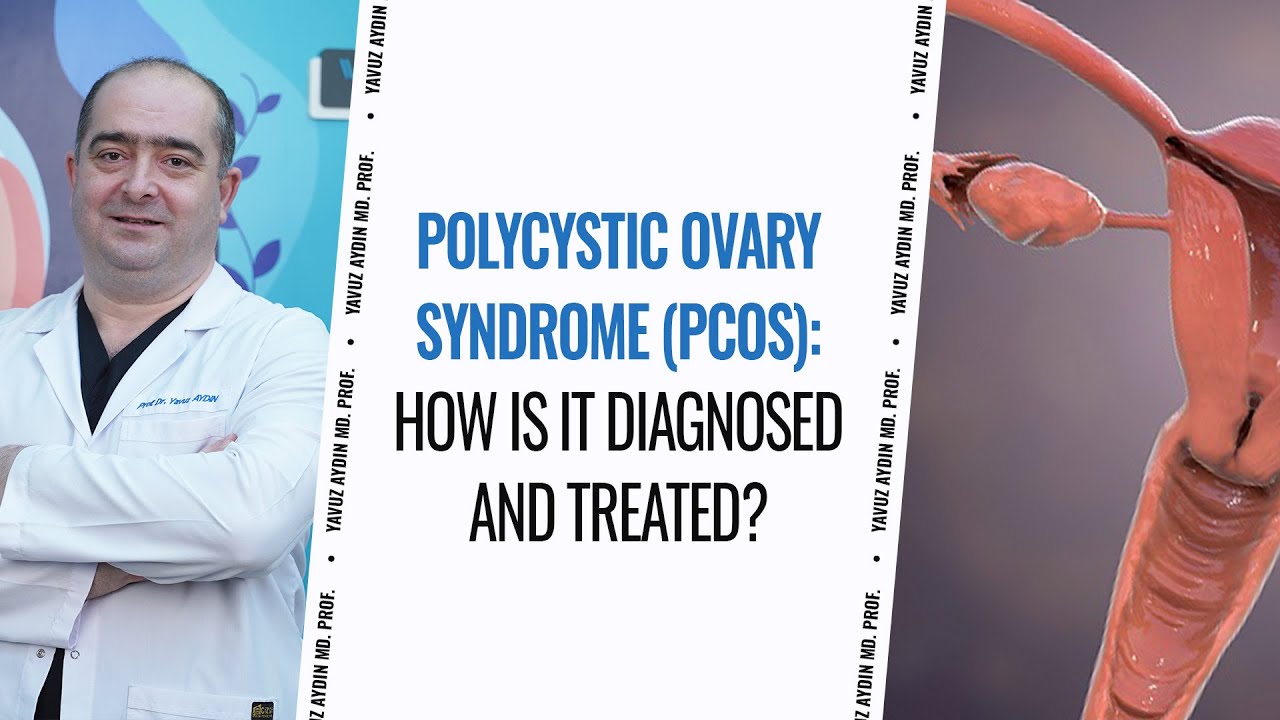
Polycystic Ovary Syndrome (PCOS), which is a common disease especially in women under the age of 30, is the formation of many benign cysts in the thick egg tissue in the ovary.

As a result of the disease caused by the abnormal production of LH and FSH hormones secreted from the pituitary gland in the brain, ovulation does not occur regularly in the ovaries every month. Like many hormonal diseases, the causes of Polycystic Ovary Syndrome, which causes the secretion of male hormone from the ovaries, are not fully known.

How does PCOS occur?

The emergence of the disease resembles a complete vicious circle. The increase in LH hormone increases the production of male hormone in the ovaries. As a result, the male hormones (androgens) secreted are converted into estrogen in the adipose tissue. In the final stage, estrogen in turn increases LH production. This vicious circle can be broken by factors such as weight loss or suppression of the ovaries. Again, depending on the excess weight, a resistance against insulin occurs and as a result, this vicious circle is obtained by disrupting the hormonal balance.

When does it occur?

Polycystic Ovary Syndrome (PCOS) is first recognized by the onset of menstrual bleeding during puberty and affects 3% to 5% of women of reproductive age. During this period, menstrual irregularities are the most important stimulus and are seen in almost 75% of patients. The most common irregularity is infrequent menstruation. From time to time, there may be amenorrhea, that is, the absence of menstruation. Bleeding following the delay is usually large and prolonged. This irregularity is a sign of a disorder in ovulation.

Even if there is no PCOS in young girls who have just started menstruating, such disorders can be seen normally during the first 2 years. The use of regulatory medications such as birth control pills may delay the diagnosis of PCOS.

Hormones called androgens are steroid hormones such as testosterone, and they are secreted in high amounts in men and in much lower amounts in women. PCOS patients have more androgen hormones than they should have, and therefore male pattern hair growth, acne and even male pattern hair loss may occur. It is not surprising that infertility emerges as a problem due to the presence of ovulation disorders and menstrual irregularity in PCO syndrome. Infertility is not a 100% finding in PCOS cases.

In fact, some patients may ovulate regularly and become pregnant very easily despite PCOS findings. However, PCOS is still an important factor that causes delays in pregnancy and infertility. PCOS patients often need treatment to get pregnant. Approximately 40% of patients have obesity problems. Obesity alone may initiate other symptoms in some patients. In such cases, when weight loss is achieved, the problems can completely disappear.

Symptoms of Polycystic Ovary Syndrome

Symptoms generally seen in patients are menstrual irregularity, acne, oily skin, increased hair growth, infertility and weight gain. In order to diagnose PCOS, clinical findings, laboratory tests and ultrasound examination should be evaluated together.

How is PCOS diagnosed?

One of the most important diagnostic methods is vaginal ultrasonography examination. In ultrasonography, many small cysts are detected in the margins of the ovaries. These cysts are only a few millimeters in diameter and do not cause problems on their own. The source of the cysts are follicles (vesicles containing eggs) that develop but are not expelled by ovulation. Their numbers may increase over time.

Polycystic Ovary (PCO) is a definition that expresses the appearance of the ovaries in ultrasonography. It should not be confused with Polycystic Ovary Syndrome. The ultrasonographic appearance of many women may be polycystic, but the hormonal values and clinical picture are completely normal. In the general population, 20% of women have polycystic-appearing ovaries. Polycystic Ovary Syndrome (PCOS) is a group of symptoms. It means disease, that is, pathology. PCO and PCOS are two different definitions.

Blood hormone values are also important in the diagnosis of PCOS. Androgen levels, LH and FSH ratios in the blood are of great importance. A LH/FSH ratio above 3 is a finding in favor of PCOS. Again, the blood progesterone values to be checked on the 21st day of menstruation give information about whether there is ovulation or not.

Studies in recent years have shown that there is a relationship between PCOS and the hormone insulin. Insulin is a hormone released from the pancreas and enables cells to use glucose. In PCOS, there is a resistance to insulin in the cells. Therefore, the pancreas secretes more insulin to cope with the situation. This high dose of insulin inhibits ovulation by affecting the ovaries, resulting in an increase in androgens. While insulin resistance is detected in 30% of thin women with PCOS, this rate reaches up to 75% in obese women.

Long-term risks

The long-term problems and risks of PCOS depend on both insulin and androgen excess. High amounts of insulin carry a long-term risk of Type 2 diabetes. This type of diabetes can usually be controlled with a strict diet and oral medications.

Type 2 diabetes develops in 25-35% of untreated PCOS patients with weight problems in their 30s. Hormonal changes seen in PCOS also bring blood pressure problems. At the same time, high cholesterol occurs in these patients. Both conditions are high risk factors for heart disease.

Long-term menstrual irregularities increase the risk of endometrial (tissue lining the uterus) cancer. Since there is no ovulation, there is no progesterone support on the endometrium. Therefore, the endometrium is exposed only to estrogen for a long time. Thus, the risk of cancer increases.

PCOS treatment methods

Menstrual irregularity

As we mentioned before, irregular and heavy bleeding is common in PCOS due to ovulation problems. Therefore, the main purpose of treatment is to restore ovulation. In addition, ovulation stimulating medications can also be used. However, due to possible side effects, such medications cannot be used for a long time.

Excess weight is one of the causes of menstrual problems in both PCOS and non-PCOS patients. Ovulation disorders occur due to excessive production of estrogen in adipose tissue. In obese patients, a weight loss of around 5% is usually sufficient to initiate ovulation.

Birth control pills are the most commonly preferred medication group to regulate menstruation in patients younger than 35 years of age and do not want children. In the second place comes progesterone medications used after the 15th day of menstruation. Both groups of medications regulate menses.

Infertility

In 70% of women who have infertility problems due to ovulation disorder, the problem is PCOS. This is more pronounced in obese patients. The first thing to do in PCOS patients who want a child is weight loss.

Clomiphene citrate is the most effective of the ovulation-stimulating medications in PCOS patients. This medication is used under the supervision of a doctor.

If clomiphene fails, there are two main approaches. The first of these is to stimulate the ovaries with injectable hormones. Then it is to perform insemination. Success rates of up to 62% have been reported with this treatment. The most important complication of this treatment is ovarian hyperstimulation syndrome and multiple pregnancies. The treatment should be carried out under a very close control and by doctors who are well-versed in the subject.

The second alternative is laparoscopic diathermy (LOD). Here, the abdominal cavity is reached by laparoscopy. Small holes are made on the ovaries by burning them with cautery or laser. Although the mechanism of the treatment is unknown, it was observed that it provided regular ovulation and improved the response to clomiphene. Spontaneous pregnancy rates within 12 months after LOD range from 60 to 80%. The success of LOD is better in those with infertility duration less than 3 years and those with LH levels greater than 10.

Hair Growth

Hair growth (hirsutism), which occurs due to the excess of male hormones called androgens, is a common condition in PCOS cases. While some women do not worry about it, it is the main reason for applying to the doctor for some women. In some cases, hair growth is not due to hormonal imbalance and may be structural. Existing hair cannot be eliminated with treatment, and bleaching or epilation is required in this regard.

Since birth control pills reduce androgen levels in the blood, they can prevent new hair growth. The most commonly used medication for this purpose is a substance called cyproterone acetate. It can be used alone or in combination with some other medications. Hirsutism treatment is a long-term treatment. It may take 8 to 18 months of treatment for success. This is due to the slow growth of hair.

Since PCOS and insulin resistance are often seen together, one of the new approaches in the treatment of PCOS is the use of medications that increase insulin sensitivity. Although there are not enough studies on this subject, the first results show that the success rates are quite high.

Plan your treatment and get a price quote online
30 minutes of free online video or telephone consultation
Prof. Dr. Yavuz Aydın
It can respond in about 1 hour.
Prof. Dr. Yavuz Aydın
Hello, how can I help you?
02:38
Yavuz Aydın - DoktorTakvimi.com